Thu Jan 01 2026
RohoPay
Go
PostgreSQL
Redis
Docker
Next.js
TypeScript
TanStack Query
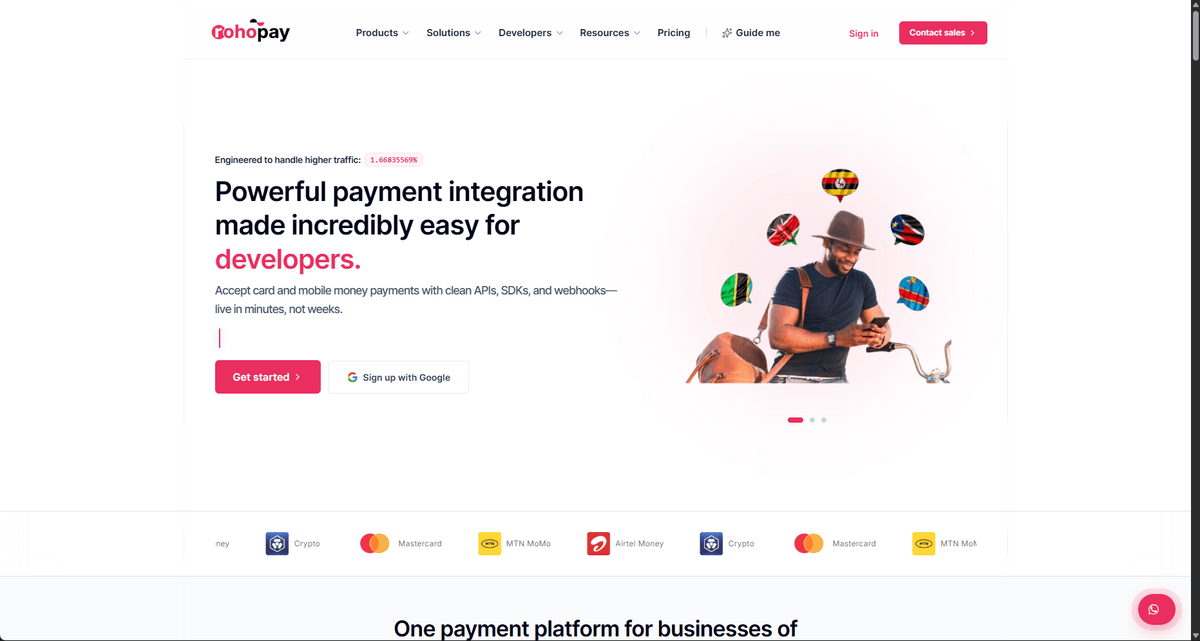
A unified payment gateway for African businesses that lets merchants accept mobile money and card payments, send payouts, and share payment links through one integration. Built with Go, PostgreSQL, Redis, and Docker on the backend, and Next.js, TypeScript, and TanStack Query on the frontend.
What is RohoPay?
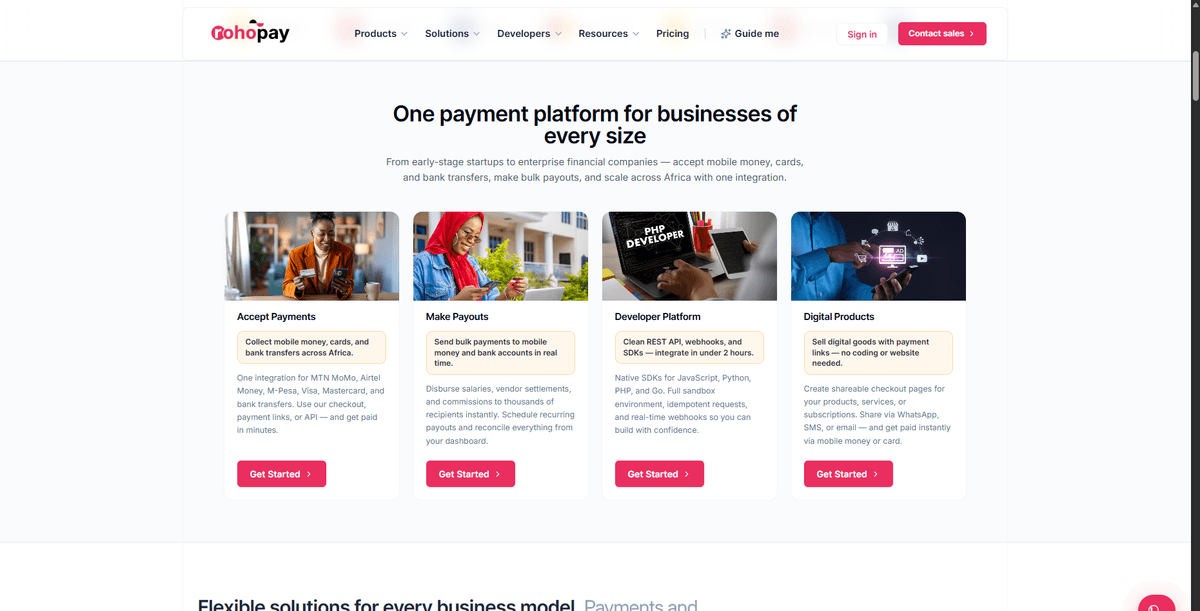
RohoPay is a payment gateway built for African businesses. It gives merchants a single platform to accept mobile money and card payments, send payouts, create payment links, and manage transactions from a dashboard, with clean APIs and webhooks for developers who want to integrate it into their own products.
The Problem
Taking payments online in Africa is harder than it should be, especially for small and growing businesses:
- Fragmented payment methods: Customers pay with MTN MoMo, Airtel Money, and cards. A business that wants to accept all of them usually has to integrate each provider separately, each with its own API, rules, and failure behaviour.
- Slow, complicated integration: Provider onboarding and technical integration can take weeks, which keeps startups and small shops from selling online at all.
- No easy way to charge without a website: Many sellers operate over WhatsApp, SMS, or social media and have no checkout page to send customers to.
- Manual payouts: Paying salaries, vendors, or commissions to many mobile money accounts one by one is slow and error-prone.
- Weak visibility: Merchants need reliable transaction status, webhooks, and reconciliation to know who has paid and what has settled.
RohoPay was built to solve these problems with one integration and one dashboard that cover collecting money, paying it out, and tracking all of it.
Products
1. Payment Collections
Merchants can accept payments through whichever channel suits their business.
Features
- Mobile money payments (MTN MoMo and Airtel Money)
- Visa and Mastercard card payments
- Hosted checkout with an itemized order summary
- Shareable payment links that need no website or coding
- Invoicing
2. Payouts
Merchants can send money out as easily as they take it in.
Features
- Payouts to mobile money accounts and bank accounts
- Bulk payments for salaries, vendor settlements, and commissions
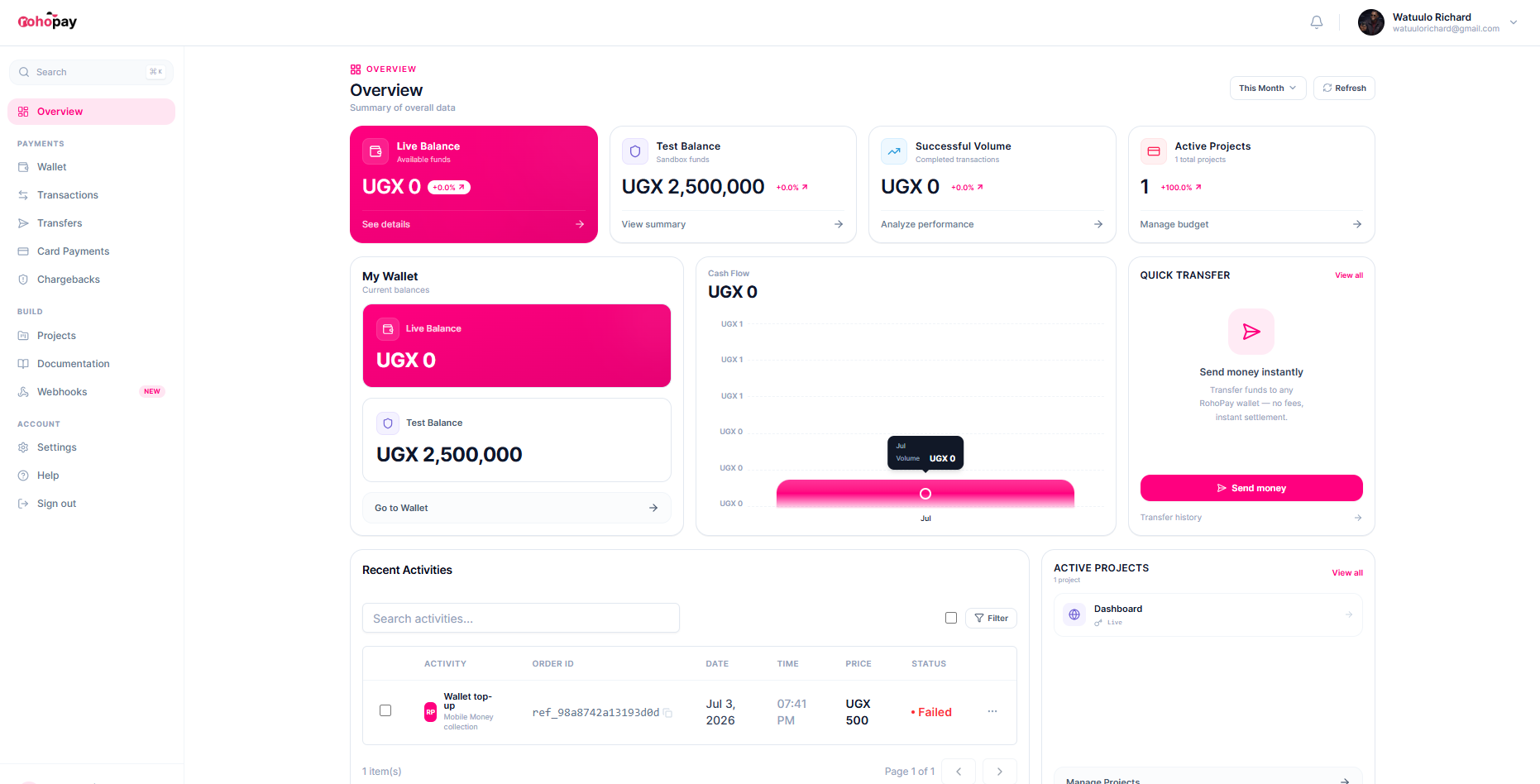
- Payout status tracking from the dashboard
3. Developer Platform and Merchant Dashboard
Features
- REST API with webhooks for real-time payment events
- Sandbox environment for testing before going live
- Idempotent requests to prevent duplicate charges
- Merchant dashboard for transactions, payment links, and payouts
- SDKs and documentation for developers
User Workflow
- A merchant signs up on the dashboard and gets API keys
- They test the integration in the sandbox
- A customer pays through the checkout, a payment link, or the API using mobile money or a card
- RohoPay processes the payment and notifies the merchant through a webhook
- The merchant tracks the transaction and sends payouts from the dashboard
How it Works
- The Next.js frontend serves the marketing site, checkout pages, and merchant dashboard
- TanStack Query manages data fetching, caching, and refreshing, so transaction lists and statuses stay current
- Requests reach a Go backend API, which validates them and records each transaction in PostgreSQL
- Go's go-routines let the backend handle many payments, provider calls, and webhook deliveries concurrently
- Redis provides fast caching and short-lived state to keep the API responsive
- The whole backend runs in Docker containers for consistent builds and deployments
Tech stack
- Frontend
- Language: TypeScript
- Framework: Next.js (React)
- Data fetching: TanStack Query
- Backend
- Language: Go
- Concurrency: Go-routines
- Database: PostgreSQL
- Cache: Redis
- Containerization: Docker
Why This Stack
Go suits payment systems because its go-routines make handling many concurrent transactions simple and efficient. PostgreSQL gives the strong consistency that financial records need, and Redis keeps hot paths fast. Docker makes the backend reproducible across environments. Next.js and TanStack Query give merchants a fast dashboard that stays in sync with live transaction data.
Get Involved
If you're a business or developer who wants to accept mobile money and card payments, visit rohopay.com or read the developer docs.
Stay Connected
- Website: rohopay.com
- Docs: docs.rohopay.com